

It is a management decision that affects costs, deadlines, supply chain sustainability, and even the legal security of the transaction. At SZMA Logistics, chartering is a tool that enables businesses to achieve controlled logistics where standard liner services are either unsuitable or become too risky and expensive, especially in 2026, amid sanctions restrictions, complicated compliance, and unstable route traffic capacity.
What is chartering in simple terms?
Chartering is the conclusion of a contract for the carriage of goods by sea (and sometimes mixed) transport, where the client rents a transport vessel:
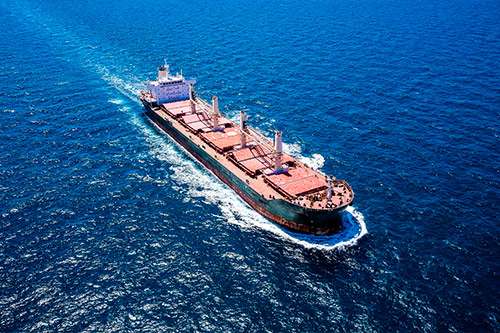
- entire ship,
- a part of the ship,
- specific cargo places/holds,
- or organizes transportation under the charter contract terms.
While liner shipping is "on schedule, at a rate, according to the line's rules", chartering means flexibility: the route, time limits, the type of vessel, the loading/unloading terms, the liability of the parties, and the cost are determined according to the client's needs.
Who really needs chartering and when
Chartering is especially in demand when the cargo or the situation does not fit into standard container logistics.
For exporters and importers having large lots
If the volumes are tens of thousands of tons or you have regular shipments, chartering often offers better economics and predictability.
For production companies
Factories that prioritize production cycle: raw materials must arrive on time, and finished products must leave without downtime.
For project logistics and oversized cargo
Equipment, metal structures, energy modules, special equipment — in cases where containers are not suitable.
For commodity traders
Grain, coal, ore, fertilizers, timber, metals — these are classic charter cargo areas.
For businesses operating in complex jurisdictions
In 2026, logistics is more than just transportation. This also includes compliance, sanctions risks, insurance and payment restrictions, and document and route requirements.
Chartering types: What do SZMA Logistics clients choose?
Chartering comes in different forms, and the choice of the mode determines price, risk, and control.
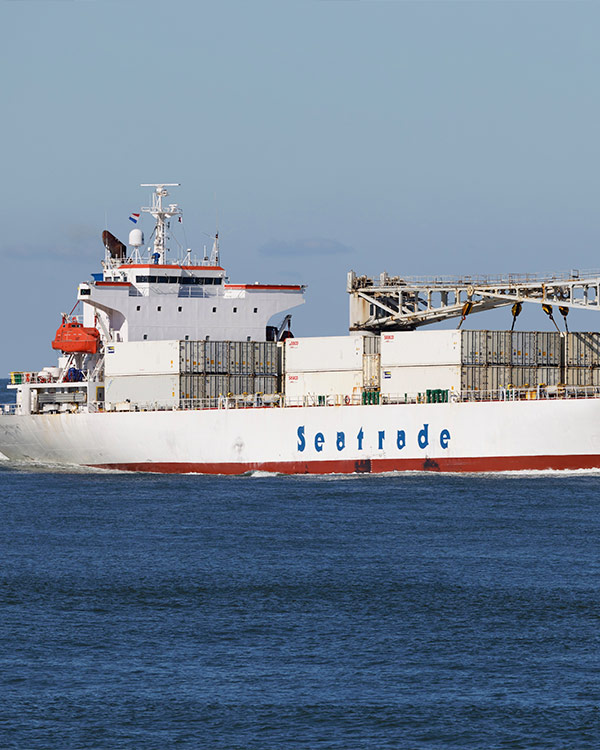
Voyage Charter
Vessel rental for one voyage between ports with the agreed cargo and terms. It is suitable when you need a one-time large shipment and a clear price "per voyage / per ton".Time Charter
The vessel is chartered for a period of time (e.g. 3-6 months). It is suitable for regular shipments where the fleet and the schedule control are important.Bareboat Charter
In fact, a "bareboat charter" is a rare mode for a narrow range of tasks.Part Charter / Space Charter
Rent of a part of the capacity: hold, deck, a certain volume. Often used for general cargo, equipment, metal, timber.Container capacity via operator (as a freight element)
Even in container schemes, a logistics specialist can "collect" a rate as freight combining the sea portion, feeder, port fees, land delivery, and services.
How charter rates are formed: what makes up the price
The charter rate is not a "figure out of thin air". It is the sum of costs + risks + market conditions.
Vessel type and availability
Handysize, Supramax, Panamax, etc. — each class has its own economy. If there is a shortage of fleet on the market for a specific route, the rate increases.Route and haul (distance)
The longer and more complex the route, the higher the cost: fuel, time, port fees, risk of delays.Cargo's features
- bulk / general / hazardous / temperature-sensitive
- requirements for fastening, packaging, humidity
- the need for a surveyor, a laboratory, and special holds
Loading/unloading terms (laytime, demurrage, dispatch)
It is crucial for charter contracts:- Laytime is standard time for operations
- Demurrage is a fine for exceeding it
- Dispatch is a bonus for early completion (not always applicable)
Port conditions
Depths, draft restrictions, handling speed, queues, seasonality, storm risks. A port with slow loading/unloading = a higher probability of demurrage (penalties for downtime).Bunker (fuel) and its price
Fuel price + environmental requirements + vessel speed directly affect chartering.Insurance and legal architecture of the transaction
In 2026, insurance and compliance became part of the tariff: verification of ownership chains, restrictions on banks, documentation, ports, and flags.
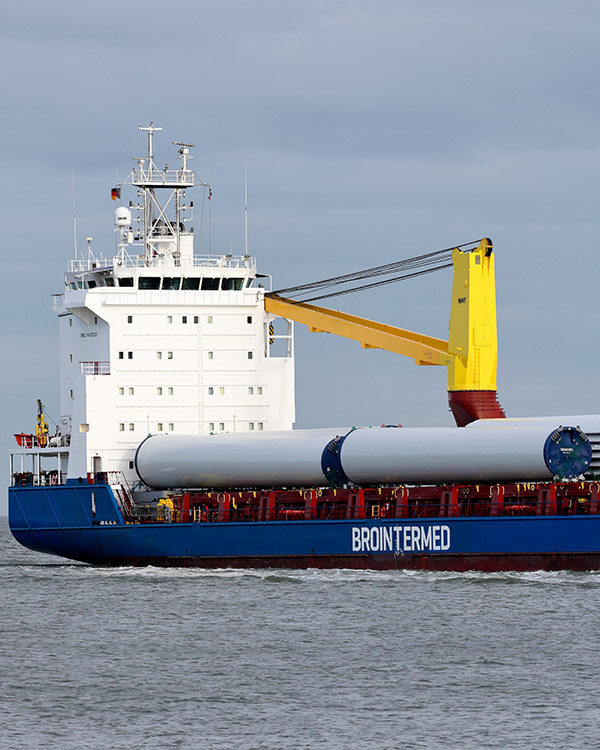
In fact, chartering most often changes abruptly due to:
Seasonality (grain windows, peak months for raw material supplies).
-
Shortage of suitable tonnage in a specific region.
-
Ports' overload and actual downtime.
-
Changes in regulation and sanctions framework (restrictions on insurance, payments, port calls).
-
Route risks (redirections, holdings, additional checks).
Chartering in 2026: Why it's become more complicated and why is a professional broker more important than ever?
Modern logistics under sanctions is a situation where "cheaper" sometimes means "more dangerous". The risks are not abstract: they include delays, arrests, denial of insurance coverage, blocked payments, inability to enter a port, return of documentation, and additional inspections.
What the sanctions reality changes:Compliance of ship owners and operators
It has become stricter: the cargo, the sender/recipient, the banks, the route, and the documents are checked.
Insurance and P&I
Availability and conditions may vary and may sometimes impact your ability to enter the port.
Payments
Payment routing and time limits have become a logistical factor.
Documentary accuracy
An error in the wording of the cargo or transaction party may lead to loosing a week.
What does SZMA Logistics do in such conditions?
Chartering with SZMA Logistics is not just about selecting a vessel, but about turnkey transaction management:
- selection of the optimal type of chartering (voyage/time/part) for the client’s task;
- developing a route taking into account real constraints;
- mitigation of the risk of downtime and controversial situations.
- coordination of ports, agents, surveyors, and terminals;
- control of documentation and the logic of its processing;
- agreement on the charter party terms (laytime, demurrage, liability);
Why is chartering often more cost-effective than standard shipping?
Chartering provides businesses with something that is worth a lot in 2026:
Control of deadlines
(and the ability to influence them)
Scalability
for big volumes
Route flexibility
Transparent liability
of the parties to a contract
Risk management:
legal, financial, operational
Bottom line: chartering is a strategy, not a one-time service
When the market is volatile, rules are changing, and the sanctions framework affect every transaction, chartering becomes a way to be independent of a chance. This is why, in 2026, companies are increasingly choosing charter solutions and are less likely to rely on "personal connections".