

International transportation by rail is the delivery of goods between countries via the railway network using containers, wagons and platforms. This mode is especially in demand when predictable deadlines, stable costs and safety are important when transporting large volumes over long distances.
Rail logistics is the optimal choice for industrial products, raw materials, equipment, containerized goods, and project cargo.
Advantages of transportation by rail are:
Reliability and regularity
Less impact of weather factors and seasonal restrictions.
Profitable economy
At medium and long distances, especially with large batches.
High load capacity
Suitable for heavy and bulky loads.
Safety
Container and wagon shipments reduce the risk of damage and loss.
Convenient multimodality
Rail transportation can be easily combined with delivery by road and by sea.
How SZMA Logistics organizes international rail transportation
SZMA Logistics handles the entire process — from route planning and processing of documents to traffic control and shipment closure. We act as a single window between cargo owner, railway operator, terminals and related carriers.
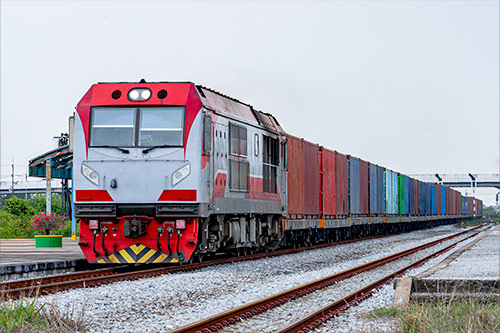

We analyze the task and propose an optimal solution:
- type of shipment: container, wagon, platform, consolidated/full shipment;
- selection of route and terminals (taking into account deadlines, tariffs, restrictions);
- cost and deadline calculation, agreement on transportation terms and liability of the parties.
Depending on the destination and the delivery terms, SZMA Logistics prepares and verifies documentation package, including:
- transportation documents (railway bills of lading and accompanying documents for the route);
- commercial documents: invoice, packing list, specifications;
- documents for customs clearance, certificates/permits, data according to the commodity nomenclature of foreign economic activity code, if required;
- instructions for marking, fastening and transportation requirements (if the cargo is non-standard/heavy).
We verify documentation data (weight/volume/codes/names/addresses) in advance to eliminate discrepancies that often lead to downtime and additional costs.
We organize the provision of rolling stock through interaction with the railway operator:
- booking container space/platforms/wagons for specific dates;
- agreeing on technical requirements (dimensions, weight, type of fastening, characteristics of the cargo);
- coordination with the terminal regarding slots, acceptance and handling of containers/wagons.
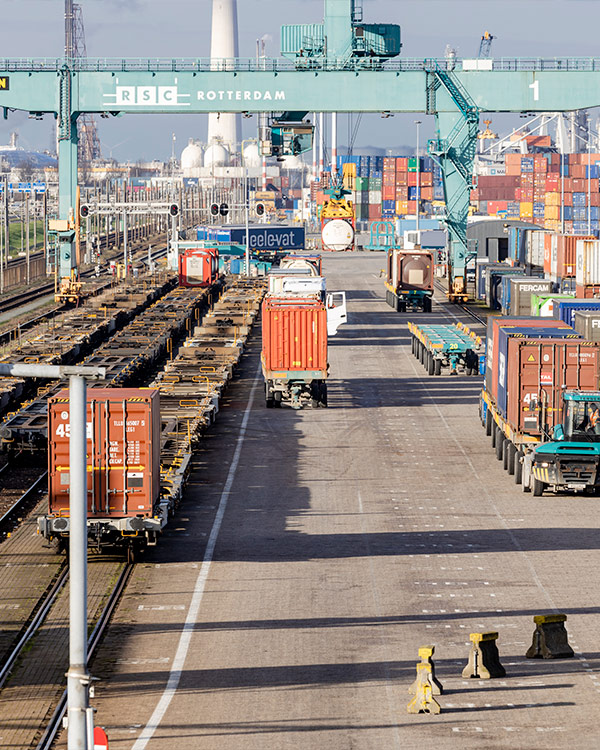

Before the start of transportation, we ensure the shipment is ready:
- we check packaging, labeling, and compliance with transportation requirements;
- we organize pick-up by truck at the warehouse/terminal (if “door-to-terminal” mode is required);
- we control weighing, photographic recording, and the condition of tare/containers;
- for heavy/oversized cargo, we agree on a placement and fastening diagram.
In transit, SZMA Logistics ensures process control:
- monitoring of movement along the route and control of checkpoints;
- prompt interaction with the railway operator in case of schedule changes;
- reporting the cargo owner about statuses, time limits and possible risks;
- organizing transshipment / change of haul within the framework of a multimodal scheme, if required.
After the cargo arrives, we:
- coordinate arrival at the terminal, unloading/issuance of the container or wagon;
- organize terminal-to-door delivery (delivery to the recipient’s warehouse), if required;
- close the shipping documents and hand over the set of closing documents to the client;
- record the results of the shipment and provide recommendations for optimizing future shipments.
Interaction with the railway operator and the cargo owner
With the railway operator
We agree on schedules, rolling stock provision, tariffs, terminal operations, and route monitoring.
With the cargo owner
We clarify the cargo specifications, deadline/term requirements, prepare documentation, coordinate a loading plan, and ensure transparent communication at every stage.